
Why Is My Water Heater Leaking From the Bottom?
Water pooling at the base of your heater has a few possible causes. Learn how to tell a drain valve leak from
Water heater water that is too hot is a safety problem. Water above 140°F can scald in seconds, and a heater that overheats can damage itself.
If the water is dangerously hot, turn the thermostat down to around 120°F or turn the heater off, and be careful with every tap until it cools.
Do not keep using scalding water, and do not let children use the taps until the temperature is back to normal.
A thermostat set too high, a failed thermostat that keeps the burner or element on, or a failed gas valve are the usual causes.
On an electric heater, a failed upper thermostat can make the heater run non-stop.
If turning the thermostat down does not fix it, or the heater keeps overheating, call a provider promptly.
A heater that overheats can trip the relief valve, and if the relief valve is also faulty the situation can become dangerous.
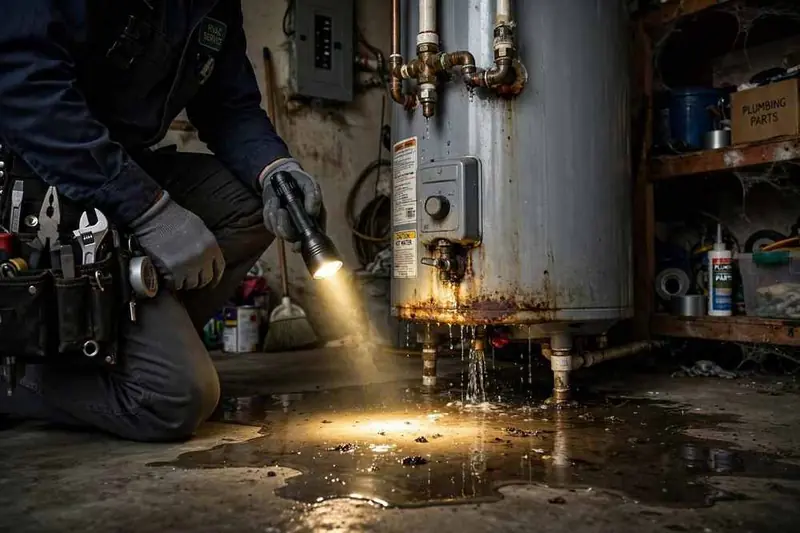
Water pooling at the base of your heater has a few possible causes. Learn how to tell a drain valve leak from
A pilot light that keeps going out is usually a thermocouple, pilot or gas valve problem. Learn the causes and
Rusty or brown hot water usually points to the anode rod or the tank. Learn how to tell which one it is and wh
Most safety guidance suggests around 120°F, which is hot enough for showers and washing while reducing scald risk.
The usual causes are a thermostat set too high, a failed thermostat, or a failed gas valve. A provider tests the thermostat and the valve to find which one it is.
Yes. Water above 140°F can scald in seconds, especially for children and older people. If your water is that hot, turn the heater down or off and call a provider.
Call (480) 919-8156 and describe what your water heater is doing. Elite will connect your request with an available independent local provider — the provider handles diagnosis, pricing, scheduling and the work directly with you.