
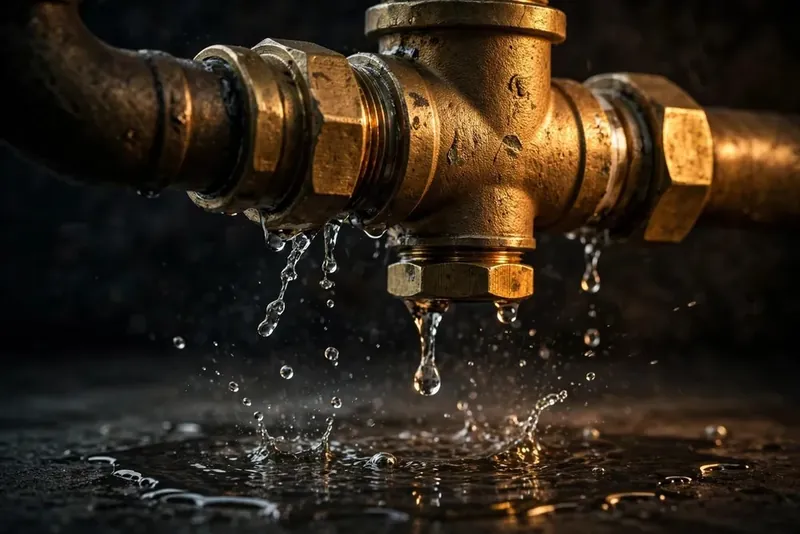
First: is it actually a leak?
Before you panic, rule out the look-alikes. Condensation can form on a cold tank in a humid garage and drip down, mimicking a leak — this usually clears once the tank heats up. Water on the floor might also come from a nearby washing machine, water softener, or AC condensate line. Dry the area, watch for a few hours, and see whether the moisture returns and where exactly it appears. If it keeps coming back, treat it as a real leak.
First things to do when you find a leak
- Shut off the cold-water supply using the valve on the pipe entering the top of the unit. This stops the tank from refilling.
- Kill the heat source. For electric units, switch off the breaker. For gas units, turn the gas control to pilot or off — and if you smell gas, leave the area and call your gas utility first.
- Contain the water with towels or a wet-dry vacuum to protect flooring and walls.
- Note where the water is coming from — top, bottom, a valve, or a pipe connection. A photo helps the provider prepare.
Never touch electrical components with wet hands or while standing in water. When in doubt, shut things off from a dry position and wait for a professional.
Common causes, from simplest to most serious
Leaks fall into three places: the tank itself, the pipes and fittings, and the valves. Valve leaks — at the drain valve or the pressure-relief (T&P) valve — are common and often repairable; a leak through the tank wall is the serious one.
Loose drain valve
The drain valve near the bottom of the tank is used for flushing. If it wasn't fully closed after the last flush — or its washer has worn out — it will weep. This is one of the easier fixes a provider handles. A maintenance flush is a good time to have the drain valve checked — see water heater maintenance.
Leaking inlet or outlet connections
The hot and cold pipes entering the top of the tank use threaded fittings that can loosen or corrode over years of thermal cycling. Drips here are usually repairable, though corroded nipples sometimes need replacement. Leaks at pipes and fittings are among the most repairable leak types; a provider tightens or replaces the fitting rather than the tank.
Temperature-and-pressure (T&P) relief valve discharge
The T&P valve is a safety device that releases water if temperature or pressure climbs too high. Occasional drips can come from a worn valve, but a valve that runs continuously may signal excessive pressure or overheating — that warrants prompt professional attention, not a DIY cap or plug (never plug a relief valve). A relief valve can weep for three different reasons: the valve itself is faulty, the thermostat is overheating the water, or pressure in the system is genuinely too high. A provider determines which one it is — never plug or cap the valve.
Condensation mistaken for failure
As mentioned above, a cold tank in a warm garage can sweat. True condensation stops once the burner or elements bring the tank up to temperature. Persistent "sweating" that never stops is something else.
Internal tank corrosion — the serious one
When the steel tank itself rusts through, water seeps from the jacket, often pooling at the base with no obvious fitting to blame. Tanks can't be reliably patched; once the vessel leaks, water heater replacement is the standard recommendation. Rust-colored water from the hot taps is often the early warning that precedes this stage. This is a leak from the tank itself, and it is the clearest replace signal on this page: a tank leaking through its own wall cannot be reliably patched.
When a leak is an emergency
Call for Emergency Water Heater Repair if you see active flooding, water spreading across flooring, a relief valve discharging heavily, any smell of gas, or sparking/burning smells near an electric unit. For a slow, contained drip with the water supply shut off, a standard repair visit is usually the right next step.
The bottom line
Where the water comes from tells the story: top-of-tank leaks are often fixable connections, while bottom-of-tank pooling usually means the tank is done. Either way, a quick professional look beats guessing. A quick professional look beats guessing at the source. Call (480) 919-8156 or Contact Us — tell us where the leak is, and we'll connect you with a local provider who can sort it out fast.